
The discourse on reproductive rights currently focuses on contraception and abortion. While the former is generally non-controversial (most people seem to think that contraception is always permissible), the latter is still fiercely debated and largely restricted in many places of the world. In this article, I would like to turn the question on its head and ask whether pregnancy itself could actually be the issue.
Before I start, I would like to state that I am not an antinatalist. I think having kids is a good thing, and though I believe that suffering is a significant issue and human lives are far from perfect, I also think humans have a fair chance at helping themselves and other species abolish suffering.1
Therefore, I am not going to argue that having kids is morally wrong. However, I am going to argue that becoming pregnant, or getting someone pregnant, might soon become morally wrong due to the advances in biotechnology.
Section 1: A cursory evaluation of pregnancy.
Pregnancy is the process of carrying one or more offspring inside one’s uterus for a few months, usually followed by giving birth. It is the natural process by which humans, and most2 other mammals, reproduce.
In this section, I will try to list the risks and benefits associated with this process, to make a cursory evaluation of the risk/reward ratio.
1.1 Risks.
For the mother, the risks essentially consist of complications, which include things like constant nausea and vomiting, diabetes, permanent brain damage (pre-eclampsia and eclampsia, present in up to 8% of pregnant women, can lead to neurological issues and even, in some rare cases, permanent blindness). Sometimes, the baby’s head can get stuck during the delivery process, leading to obstetric fistula3. Modern medicine has enabled us to mitigate the worst risks, at least in developed countries4, but it is still a long way before they are solved. There are also known mental health risks, such as post partum depression.5 Then there is, of course, the risk of death.
Carrying a baby for nine months is a constraint on women’s autonomy. The sheer lenght of the process, along with all the health-related issues, is a limit on their freedom as individuals. Since men do not have any similar constraint, this raises questions related to fairness: for instance, the productivity loss caused by pregnancy, especially in poorer countries, constitutes an economic drain on women. In fact, this loss of autonomy is at the heart of one of the most powerful arguments in favor of abortion, made by Judith Jarvis Thomson in “A Defense of Abortion”, also known as the “violonist argument”. A very short summary would be: “if you woke up in a hospital bed and found out a group of musicians had plugged you to a violonist with a rare disease so that your blood could sustain them for nine months while they are being treated, would you be morally obligated to give up your autonomy and stay in bed until they recover?” Thomson argues that you would only have a supererogatory obligation towards him: it would be nice of you to let him use your blood, but you wouldn’t be a bad person if you refused, and no one has the right to force you to. She concludes that abortion would be permissible even if personhood started at conception. Of course, if there were no pregnancies at all, this argument would be void.
Pregnancy may also be partially responsible for the ill-treatment of women in most human societies. Women have historically been confined to motherhood. The fact that they are forced to carry the child for nine months, along with the associated loss of autonomy, may have been used to define them as the sole responsible for the offspring’s care, thus leading, in many parts of the world , to their becoming “second-class citizen”6. Of course, this is not the only factor, and the weight of cultural practices is enormous. In fact, matrilinear societies do exist, even though they are rarer.
Moreover, pregnancy presents serious risks to the child, including premature birth, deformities, infection (passed from the mother to the child or contracted during the delivery process), or stillbirth.
Finally, it is important to note that pregnancies are the reason why abortions exist in the first place7. This may sound like the most obvious thing someone has ever said, but bear with me for a second. How many less abortions would there be if we could monitor the health of the baby in real time, and ensure that no complications ever arised from the human reproductive process? Wouldn’t most health-related abortions become unnecessary? Moreover, if there were no more unwanted pregnancies, wouldn’t the discussion about whether abortion is permissible or not become irrelevant?
1.2 Benefits.
The most important benefit of pregnancy is that it reduces the risk of developing some cancers, such as breast cancer (12 to 14% reduction if gestation lasts more than 34 weeks), and other types of cancer, namely endometrial and ovarian cancer. However, pregnancy also seems to increase the risk of developing kidney cancer8, so it is quite uncertain whether the overall effect on cancer risk is beneficial or detrimental. Note that the reduction observed in the risk of developing ovarian cancer might simply be the result of stopping ovulation for nine months, which could be replicated by taking birth control pills continuously.
Another benefit is a significant reduction in primary dysmenorrhea, a condition that causes some women to have painful cramps during their periods. This reduction is more significative for women who give birth spontaneously rather than via C-section, which seems to indicate that it could be a consequence of the stretching of the birth canal. However, this issue can be resolved entirely by simply stopping periods altogether (see above), so it is unclear why it should count as a benefit.
Some studies show a remission for women suffering from autoimmune diseases, most notably Multiple Sclerosis and Rheumatoid Arthritis, with the hypothesised explanatory mechanism being microchimerism. However, the evidence also seems to show an increased risk of developing other autoimmune diseases later in life, such as Systemic Sclerosis and Autoimmune Thyroiditis.
Pregnancy seems to increase neuroplasticity. The available evidence seems to indicate that the mother’s brain undergoes significant changes, most notably a decrease in cortical volume, a decrease in gray matter, and an increase in white matter. It is believed that these changes may foster empathy and facilitate bonding between mother and child, but I could not find a causal mechanism in the literature.9 It is important to mention that I didn’t find anything that indicated that this increased neuroplasticity was either beneficial or detrimental, except this hypothesised bonding mechanism and vague allusions to “mom brain”: forgetfulness and fatigue that may as well be explained by stress and sleep deprivation.
There is one last potential positive effect. In patriarcal societies, the role of “mother” allows women to gain higher social status and influence. However, it is unclear whether this is a true benefit, or simply a consequence of the limitations imposed on women in these societies, where the main path to social recognition is motherhood.
1.3 Risk/reward ratio.
To abstract the risk/reward ratio from this long list of facts, I believe that it is best to construct a non-reproductive hypothetical in order to avoid the cognitive dissonance induced by the fact that pregnancy is still necessary for the survival of the species.
Suppose someone developed a treatment that seriously limited people’s autonomy for nine months, gave them depression, made them vomit periodically or constantly, increased their risk of developing renal cancer, shrinked their brain, gave them blood clots, could potentially disable them permanently or cause them to die, in exchange of reducing their risk of developing some other cancer and offering partial relief from pains that could be treated more efficiently by taking another medication. It seems clear that this treatment would be thought to have a bad risk/reward ratio, and it is unlikely that it would be approved for market.
Section 2: Possible alternatives.
The most obvious alternative to pregnancy would be artificial wombs, followed by a return to oviparity. A less discussed alternative would be removing the fetus before the term and putting it in an incubator for the rest of its development, thus shortening the duration of the gestation period. A return to oviparity is highly unlikely, since it would require rewriting the human genome. For this reason, it will not be discussed in the present article, and I will focus on the other two options.
2.1 Incubators.
As of today, incubators do not constitute a viable alternative for intrauterine pregnancies. There are several limitations with the technology, which include: the impossiblity to sustain infants born before the 22nd week (the stage at which the lungs start to form alveoli), moderate to high risk of lifelong disabilities10, and low survival rates for very premature infants11. In fact, 22 weeks is still considered non-viable, since the survival rate declines rapidly for very premature infants. For instance, the survival rate is 90% for those born at 28 weeks, but it drops to 60 to 70% for those born at 24 weeks. These statistics relate to those born in rich countries. In poor countries, the survival rate is still appallingly low.
Incubators are not replicas of the intrauterine environment by any means. They are “boxes” in which the neonate is maintained in a hyper-oxygenated, hyper-humid environment to support lung function and skin development. Feeding is performed using various methods depending on the developmental stage: for the most premature ones, via the umbilical stump, then via catheters or intravenously, and then, once the digestive tract is developed, via orogastric and nasogastric gavage. The final stage mimicks breastfeeding by using pacifiers.
For this reason, it seems that they cannot sustain infants born before 22 weeks (no functional lungs), and they still pose a moderate risk of infection (sepsis), Bronchopulmonary Dysplasia (permanent damage to the lungs due to constant ventilation and high oxygen levels), hypothermia (which can lead to death, since premature infants cannot regulate their internal temperature), Retinopathy of Prematurity (abnormal growth of blood vessels in the eye due to oxygen), and hearing loss (caused by noisy ventilation systems). Modern systems try to mitigate these risks by using advanced monitoring and dynamic adjustments, but they are still imperfect.
In all cases, the available evidence shows that it is not possible to use current day incubators to replace the womb: the risks to the newborn are simply too high.
2.2 Artificial Wombs (ectogenesis).
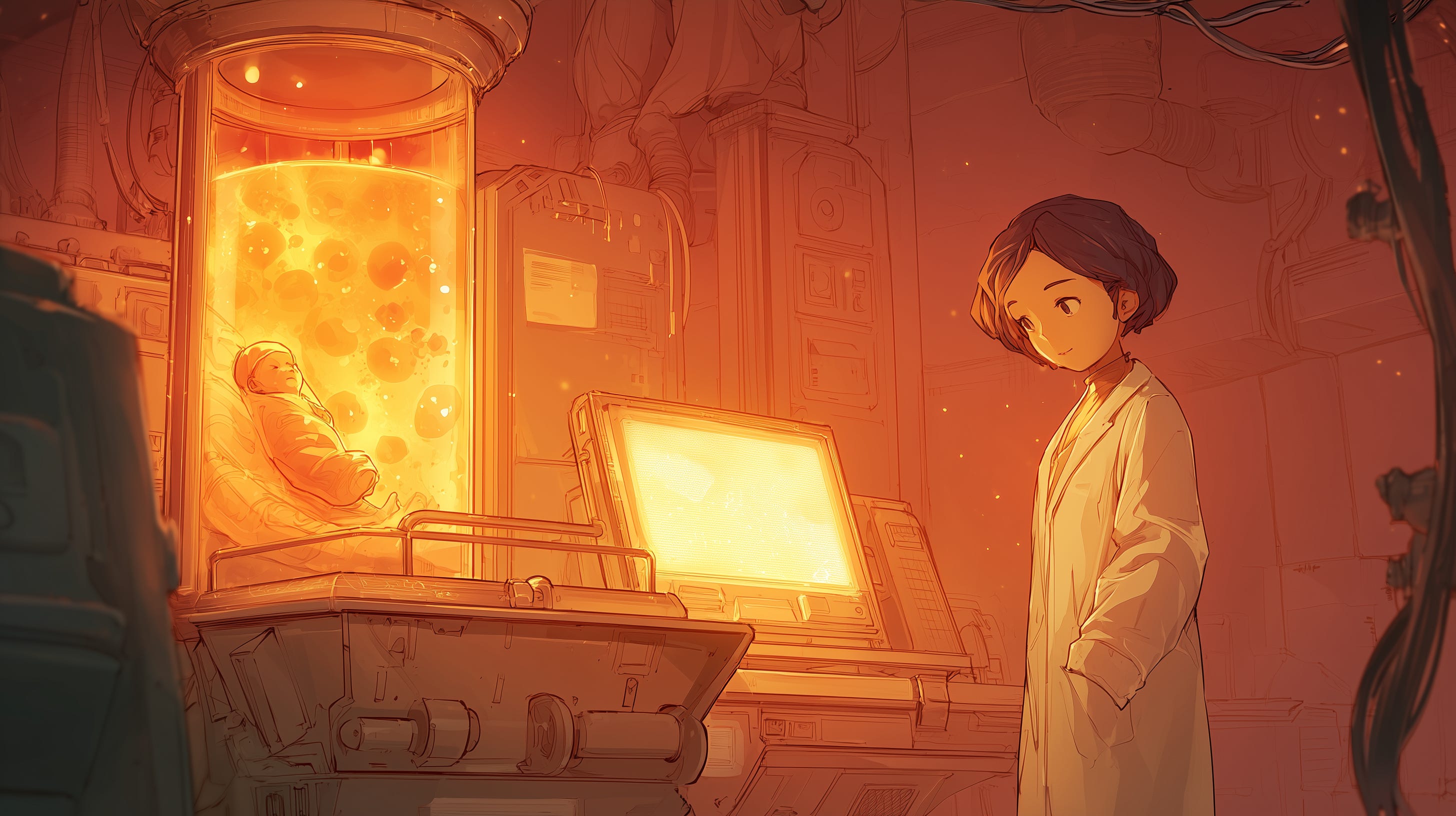
Recently, two new techniques were developed that may allow humanity to solve these issues and go beyond the 22 weeks limit. The first is called EXTrauterine Environment for Neonatal Development (EXTEND), and consists in putting the neonate in a bag filled with amniotic fluid to sustain it via the umbilical cord, without activating the lung function. This is the closest thing we have to artificial wombs, although it can’t sustain the full process from conception to birth yet.
EXTEND is not the only technology that is aiming at reproducing the intra-uterine environment to allow for safer neonatal care. A Dutch startup called AquaWomb has announced that it has developed a similar system that is currently being scheduled for testing in humans. Note that these two technologies would constitute an improvement even if they were not used to replace natural gestation, because they would prevent the unnecessary death of many premature infants.
At the other end of the gestation period, there is in vitro fertilization and embryo research. Progress in this area is still severely limited by regulatory hurdles prohibiting any embryo research beyond the 14 days mark12. There is currently a push to extend this limit to 28 days13. Most countries enforce this 14 days limit on embryo research, albeit regulations may be more lenient in some places than others. This is clearly insufficient to research ectogenesis.
It is interesting to note that there is an enormous gap between this 14 days limit and the time at which an abortion can be legally performed in most places. This seems to imply that there is significant room to extend embryo research well beyond the 28 days mark, without necessarily clashing against common intuitions. I will not be discussing this today.
As of early 2026, the most promising research on complete ectogenesis is still being performed on mice14 , whose embryos we can now grow from fertilization to organogenesis, thus bringing us much closer to simulating the full gestation process. I conjecture that we will soon be able to grow a full animal using the same technology. Once we get there, it’s only a matter of time before people start asking why the right to use this method of reproduction is denied to humans.
2.3 Evaluation.
Despite all the hype about artificial wombs, it seems that the most promising path to full ectogenesis is actually neonatal intensive care. The pressure to ensure survival of premature infants is strong, as parents usually have high emotional investment in their offspring and do not want to see them die before they even get a chance at experiencing life. I predict that we will keep seeing more and more sophisticated systems, allowing for survival way before the 22 week limit, and leading to a significant drop in related long term health issues. In parallel, the regulations regarding embryo research will slowly become less stringent, allowing research teams to grow them until they reach organogenesis. Stem cell research will probably be a factor, allowing progress to continue while various bans are still in place. Once this stage is reached from both sides of the gestation process, the two types of support systems should be virtually identical, and could be used interchangeably for either purpose. Whether we can use them as artificial wombs will then no longer be a technological question, but an ethical/societal one.
Section 3: Ethical implications.
3.1 Analysis from different moral perspectives.
The Utilitarian case is straightforward: pregnancy causes pain and limits agency, therefore, once a better alternative appears, it automatically becomes immoral. However, most people are not Utilitarians, and are often revulsed by Utilitarian conclusions, even though they tend to become widely accepted after a few decades or centuries.
A Kantian may reason along the following lines: pregnancy is a process that consists in using the female body to create another being. Therefore, the person getting pregnant is using herself as a means to an end, violating the Categorical Imperative. The person who made her pregnant is also violating the Categorical Imperative, because they are using another person’s body to achieve their ends of procreation (or, in the case of unintended pregnancies, putting another person at risk, harming their rational agency).
A Virtue Ethicist may say: while giving birth can definitely be seen as a virtuous act, a self-sacrificial effort to bring another being into existence and to contribute to human flourishing, let’s remember that we are only talking about pregnancy here, not reproduction. It is unclear whether there exists a set of Virtues that entail that women can put their life and that of their future child at risk if there is a safer alternative.
A Rawlesian may think: behind the Veil of Ignorance, would people choose a society where they have a 40% chance15 of being at risk of experiencing at least some of the symptoms listed in section 1.1 instead of one where the same result can be obtained without experiencing them? It seems unlikely.
A subjectivist16 might be swayed by appeals to empathy, allusions to increased economic productivity, or by considering the alternative uses of the resources that are currently dedicated to antenatal care. If their own preferences align with these things, then maybe they will be convinced, or not17. However, I believe that most humans want, at the very least, a fairer, safer society, even when they fundamentally disagree about metaethical views. Therefore, I believe that it is possible to convince most subjectivists that ectogenesis is preferable.
Listing every single moral system is impossible in this article, but I believe that the majority would either conclude that pregnancy is only permissible if there are no viable alternatives, or that both pregnancy and ectogenesis are permissible (I am specifically thinking about libertarianism here). Since these alternatives are now within our reach as a species, we should start considering the possibility that it has/will soon become immoral.
3.2 Objections and replies.
I have only been able to find three objections against ectogenesis.
The first one is that it would facilitate eugenics, something that is not permitted under most deontological systems. However, it is difficult to understand how it would be different from what is already happening with prenatal screening and IVF, especially since designer babies are already knocking at Humanity’s door. Eugenics used to rely on cruel, coercive methods to force rigid societal “ideals” on a population that was denied agency. Ectogenesis, on the other hand, increases agency. In fact, it would actually be safer to deliver otherwise “fragile” babies by using heterotopic support systems rather than letting them develop in the womb. For example, babies born with Osteogenesis imperfecta, a condition that causes extremely brittle bones, often suffer multiple fractures upon delivery. Those who suffer from severe forms of Epidermolysis bullosa (aka “butterfly skin”) are sometimes born with splinters or missing skin, often due to mechanical friction during the delivery process, which can cause infections. Moreover, the “eugenics” objection is loosing its strenght rapidly as gene-editing technology advances. CRISPR and its successor TIGR-Tas already allow us to rewrite the genome “on the go”, and it is probably only a matter of time before people start using these technologies and their successors for enhancement in addition to healing. Finally, it is not clear why it matters whether screening for diseases and healing them happens before or after delivery, especially if changes become reversible as the genome itself becomes editable. The eugenics objection is therefore invalid: the technology discussed in the present article would actually enable the birth of children who would have died without it, and the question of whether genetic changes are made or not made (either before or after birth) is a separate one.
The second objection is that it would diminish women’s role in society (see above, section 1.2, paragraph 5), which could be a problem for all moral systems that value agency18. But again, it is more likely that pregnancy actually hinders women’s ability to participate in society, as it is used as an excuse to keep them under the subjugation of men. In fact, in more egalitarian societies, women tend to have less children (or no children at all), because they are free to prioritize their careers and their other life goals. Being able to have kids without the burden of pregnancy would probably enable them to have even more freedom, and to contribute even more than they already are19 to the advancement of Humanity20.
The third and most powerful objection, about which I think all moral systems except libertarianism would agree, is that it would give too much power to the actors controlling the artificial wombs over the future of humanity. If babies are no longer born, but rather grown, what prevents a malignant actor from seizing control over humanity’s genome? Moreover, what prevents companies from coercing parents into an unending competition for upgrades, or from using price-gouging techniques once they become consolidated? What prevents the “elites” from deciding that they want a pacified underclass genetically programmed to be subservient forever21?
While I agree that these are valid concerns, I think this objection would be best addressed by putting regulations in place and ensuring that there is democratic oversight over the process rather than by banning the technology itself.
Conclusion.
The fact that humanity isn’t investing more efforts in developing ectogenesis may be simply due to status quo bias rather than genuine moral concerns. The analysis developed in the present article seems to imply that pregnancy is becoming less and less defensible as technology progresses. While current-generation humans will probably be unable to recognize that they have a moral obligation to move to ectogenesis, it is reasonable to believe that our descendents will see endogenic reproduction as a relic of the past, and that they will wonder why their predecessors didn’t invest more efforts in finding alternatives.
Thanks for reading! I learned a lot of things while writing this article. Even if you disagree with my conclusions, I hope you did enjoy it, and learned as much as I did!
See the works of David Pearce, especially The Hedonistic Imperative.
The platypus, and four other species of echidnea, are notable exceptions.
Obstetric fistula is the necrosis of the tissues within the birth canal due to prolonged labor, leading to the formation of a hole linking it to the bladder or rectum. While rare in the rich world thanks to C-section and modern care, it is still relatively common in poor countries. If you are interested, you can check the work of the Fistula Foundation, which is helping women suffering from the condition by giving them free reparative surgery.
This doesn’t mean that the remaining risks aren’t severe or widespread. For instance, deep vein thrombosis has an incidence of 0.5 to 7 per 1000 pregnancies, and can lead to Venous thromboembolism, a mortal condition.
I hesitated a bit before including this one. The evidence doesn’t show a clear causal link between pregnancy itself and post partum depression. Surprisingly, it also affects fathers!
For instance, in many places of the world, it is still possible for a rapist to avoid prison by marrying his victim. The (arguably bizarre) reasoning of the legislator must have been that it “protects” the woman from having to face pregnancy and child-rearing by herself.
Note that the WHO article provided in the source seems to show that the main consequence of banning abortion is the resort to unsafe, artisanal abortions, thus putting the mother’s life in danger.
Yes, it’s the same source. The article provides a complete evaluation of the effect of pregnancy on cancer risks, I recommend you read it if you are interested in learning more about this.
Feel free to provide research articles regarding this point in the comments.
This risk actually increases for all premature babies, even those who don’t need an incubator to survive. One more reason to further develop the technology.
The current definition is: any baby born before 28 weeks.
Some countries are less restrictive than others, but most of them have some kind of regulation in place around this threshold. The reason for this is that the primitive streak appears shortly after. This is the very first moment at which an embryo ceases to be a mass of indistinct cells and starts developing differentiated parts.
The 14 day limit was set in the 80s. There is almost no data on fetal development between the 14 day mark and the 28 day mark, hence the push to extend it.
If an alien species discovered Earth, they would probably wonder why humans are so obsessed with studying mice, especially after learning that most of the research we perform on them doesn’t replicate in humans and that better alternatives are available.
About half the world population is female and about 20% of women remain childless on average. The rate fluctuates with time and by country, you can explore the data here.
I disagree with some of the arguments presented in the article, but it is a pretty good start.
It seems that there is no way to predict anything based on this perspective. For instance, if a subjectivist changes their preferences while they are performing an action, then that action becomes moral/immoral according to their new set of preferences.
Agency is required to obtain concrete advances regarding other values, so any moral system will value it, at least instrumentally.
Two consecutive links! I wanted to link a list of brilliant women for every word of this sentence, but then I realized that it might be a bit too much just to make a point.
I often wonder how many problems remained unsolved for centuries simply because women were not allowed to participate in STEM.
Interestingly, David Pearce addresses this very objection in The Hedonistic Imperative. For him, it is highly unlikely that the “elites” would choose to make the masses permanently happy while they themselves keep toiling away in the hedonic dark ages. I am a bit more pessimistic than him in that I think humans are status-driven, so if a group of humans can withold pleasure-enhancing technologies from others just to be able to brag that they, and they alone, have access to them, they are likely to do so. This is why regulations and robust, decentralized oversight, are so important.
Super interesting analysis! I had fun reading this. A couple of thoughts I had that challenge this argument:
- A core assumption here seems to be that pregnancy is largely a negative and oppressive experience for the woman. The health impact and loss of autonomy are undoubtedly real. But I know several women in my life for whom pregnancy was more of a positive experience than negative. They talk about the awe and the sense of power that comes from their female body growing a whole human, and they also talk about the bond that develops between the mother and the baby during pregnancy. Does that trump the health consequences and other difficult things that most women experience during pregnancy? Maybe not, but I do think it's worth noting the individual variability and the less measurable aspects of pregnancy. Removing suffering is generally a good thing, but we usually don't know what else we're throwing out along with the suffering, until we do it and it's too late.
- On a practical level, can an artificial womb actually 100% replace all the things that a physical pregnancy provides? Not just to the baby, but also in terms of the parent-child bond, and other less measurable aspects. The parallel that comes to mind is: Even if we could create a machine that perfectly replicates all the electrical activities of the brain, that doesn't mean we created "consciousness" (presumably). Surely there are things we don't understand about creating a new life that goes beyond just creating the physical body? Maybe not a question we can empirically answer right now, but it's something that crossed my mind.
Most abortions happen because people don’t want the burden of raising a child, not because pregnancy is difficult. I expect very little impact on abortion due to artificial wombs.
I thought this article was going to be more Gattaca. In a world of genetic engineering, is natural birth a sin? Maybe sin goes too far but actively making better babies would certainly be a virtue.